


Dental Crowns and Bridges: Restoring Your Smile and Confidence at ESTE Dental Clinic
Having strong and beautiful teeth is essential for boosting self-confidence. Proper dental care not only ensures efficient chewing but also enhances your smile and overall appearance. If you have a cracked, worn, or missing tooth, dental crowns and bridges offer excellent solutions for restoring your smile and improving your daily life. At ESTE Dental Clinic, we provide comprehensive dental services to ensure your confidence in every treatment.
What are Dental Crowns?
Dental crowns are caps that cover a damaged, cracked, chipped, broken, or worn tooth or a tooth that has undergone root canal treatment. Crowns strengthen and reinforce the tooth, restoring its functionality. They also improve the aesthetics of your smile and prevent further damage to the affected tooth.
Crowns can be made from various materials, such as ceramic, metal, or a combination of both. Each material has its advantages, depending on the location of the tooth and your preferences. Choosing the right material will ensure a natural-looking tooth that functions effectively.
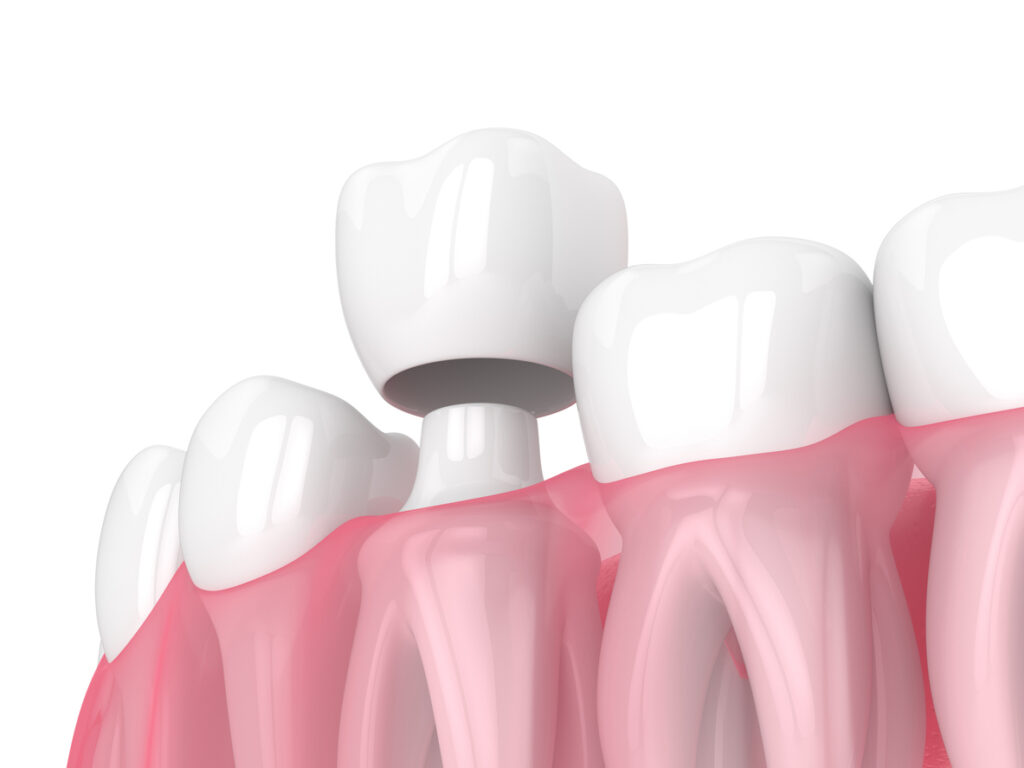
When to Consider Dental Crowns
Besides enhancing aesthetics, dental crowns also improve chewing efficiency.
- Cracked, broken, or worn teeth: Teeth with cracks or wear cannot withstand chewing forces effectively. Crowns protect the tooth from further damage and restore its function.
- Teeth that have undergone root canal treatment: After root canal treatment, the tooth is not as strong as it used to be. Crowns protect the treated tooth from breaking or fracturing.
- Small or misshapen teeth: Crowns can help reshape and resize small or misshapen teeth for a more aesthetically pleasing and symmetrical appearance.
- Preventing the spread of tooth decay: If a tooth has deep decay, a filling may not be sufficient. Crowns can help prevent further decay and strengthen the tooth.
Types of Dental Crowns
There are several types of dental crowns, depending on your needs and the location of the tooth:
- Ceramic Crowns: These are the most popular choice due to their natural appearance. Ceramic is durable and can be used for both front and back teeth.
- Metal Crowns: Metal crowns are highly durable and suitable for molars that need to withstand significant chewing forces. This material is resistant to wear and tear but has the disadvantage of not blending in with natural teeth.
- Porcelain-Fused-to-Metal Crowns: These crowns combine metal and ceramic, offering both strength and aesthetics. The ceramic portion covers the visible part of the crown, providing a natural look.
Benefits of Dental Crowns
- Restores tooth structure: Crowns restore cracked, chipped, or severely damaged teeth to their full functionality.
- Enhances aesthetics and boosts confidence: Crowns are made from natural-looking materials like ceramic or porcelain, making them blend seamlessly with natural teeth. Beautiful teeth boost confidence in speaking and smiling.
- Strengthens teeth: Crowns reinforce teeth that have undergone root canal treatment or are damaged, preventing further breakage.
- Improves chewing: Crowns correct dental irregularities like cracks or wear, allowing for efficient chewing.
- Maintains good occlusion: Crowns adjust uneven teeth or bite problems for improved chewing and occlusion.
Dental Crown Procedure
- Examination and treatment planning: The dentist examines the tooth and assesses its condition to create a suitable treatment plan.
- Tooth preparation: The dentist prepares the tooth by shaping it to accommodate the crown.
- Impression: After preparing the tooth, the dentist takes an impression to be sent to the lab for crown fabrication.
- Temporary crown placement: While the permanent crown is being made, the dentist may place a temporary crown.
- Permanent crown placement: Once the permanent crown is ready, the dentist cleans the tooth and cements the crown in place.

Dental Bridges: An Excellent Choice for Replacing Missing Teeth
Losing one or more teeth can affect your smile and your ability to chew food. Dental bridges are an excellent option for replacing missing teeth while maintaining a natural look and feel. Bridges restore your smile and allow you to chew efficiently.
What are Dental Bridges?
A dental bridge is a type of prosthetic tooth replacement. It uses the adjacent teeth as anchors to support the artificial tooth, filling the gap left by the missing tooth. Bridges function like natural teeth, offering strength, durability, and improved smile aesthetics.
Bridges can be made from various materials, such as ceramic, porcelain, or metal, depending on your needs and the location of the missing tooth.
Types of Dental Bridges
- Traditional Bridge: This is the most common type of bridge. It involves placing crowns on the adjacent teeth to support the artificial tooth in the middle. It is suitable for people with healthy adjacent teeth, as these teeth need to be prepared to support the bridge. Traditional bridges are stable, durable, and feel like natural teeth. However, they require the preparation of healthy adjacent teeth, which may lead to some tooth structure loss.
- Cantilever Bridge: This type of bridge has a crown on only one side, anchoring it to the adjacent tooth. This leaves the artificial tooth unsupported on one side. It is an option for people with only one adjacent tooth but may be less stable than a traditional bridge. Chewing hard or sticky foods may cause problems.
- Maryland Bridge: This type of bridge uses metal or porcelain wings bonded to the adjacent teeth to support the artificial tooth in the middle, instead of crowns. This eliminates the need for preparing the adjacent teeth. Maryland bridges are suitable for people who do not want their adjacent teeth prepared, but they may be less strong and stable than traditional bridges and are not ideal for replacing molars.
- Implant-Supported Bridge: This type of bridge is anchored to dental implants instead of adjacent teeth. This eliminates the need to prepare natural teeth and offers the highest stability. It is suitable for people missing multiple teeth, but the implant procedure can be time-consuming and expensive.
Benefits of Dental Bridges
- Restores chewing efficiency: Bridges enable efficient chewing without overworking other teeth.
- Boosts confidence: Missing teeth can affect self-confidence. Bridges restore your smile and boost your self-esteem.
- Maintains tooth position: Leaving a gap from a missing tooth can cause adjacent teeth to shift or tilt.
Dental Bridge Procedure
- Examination and treatment planning: The dentist examines your oral health and all your teeth to assess their condition and determine the appropriate treatment plan, which may include X-rays or dental scans for a clearer picture.
- Preparing the adjacent teeth: The dentist prepares the adjacent teeth that will serve as anchors for the bridge. This involves shaping them to fit the crowns, which are crucial for securing the bridge.
- Taking impressions: After preparing the teeth, the dentist takes impressions or uses a digital scanner to create a model for fabrication.
- Placing a temporary bridge: While the permanent bridge is being made, the dentist will place a temporary bridge for you to use.
- Placing the permanent bridge: Once the permanent bridge is ready, the dentist will place it and make adjustments to ensure a comfortable fit.
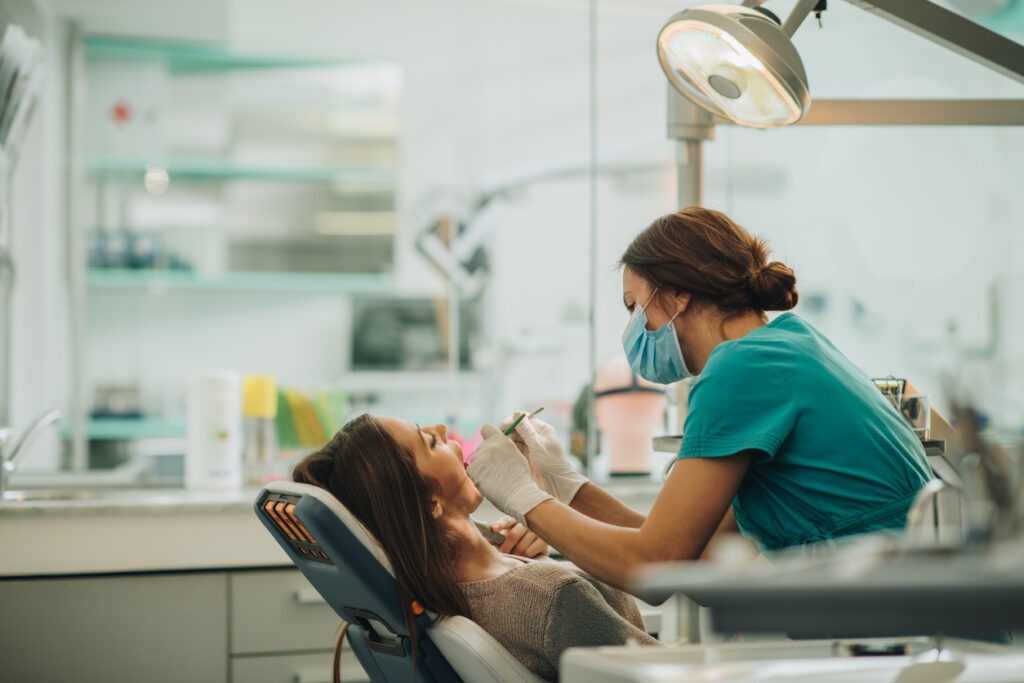
Caring for Your Dental Bridge
Proper care is essential for the longevity of your bridge and overall oral health. Here’s how to care for your dental bridge:
- Brush properly: Brush your teeth at least twice a day.
- Floss regularly: Flossing or using interdental brushes is crucial to prevent the buildup of plaque and bacteria.
- Regular dental check-ups: Visit your dentist for check-ups and professional cleaning at least every six months to ensure your bridge is in good condition.
Why Choose ESTE Dental Clinic for Crowns and Bridges?
- Specialized dentists: Our team at ESTE Dental Clinic has experienced and specialized dentists in prosthodontics, including crown and bridge procedures. You can be confident that every step of your treatment will be closely monitored.
- Advanced technology: We utilize digital technology in designing crowns and bridges, such as 3D scanning for maximum precision, and use high-quality materials.
- Attentive service: We prioritize patient satisfaction at every step. Our team is ready to provide consultations and close care.
- Convenient location in Bangsaen and Pattaya: ESTE Dental Clinic is conveniently located in Bangsaen and Pattaya, making it easily accessible for crown and bridge procedures. We are committed to providing the best service in the area.
- Highest standards of cleanliness and safety: At ESTE Dental Clinic, we prioritize cleanliness and safety standards in every step of our treatments.
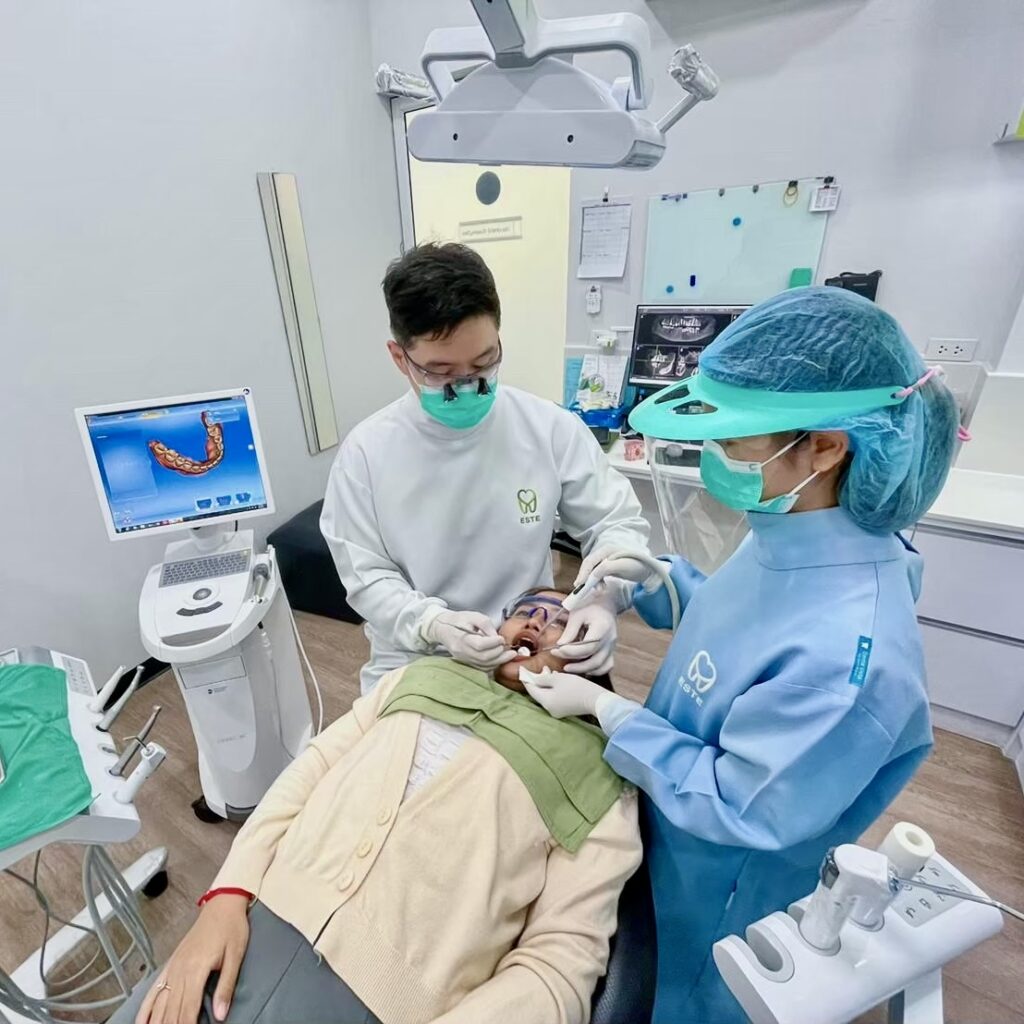
Where to Get Crowns and Bridges
Crowns and bridges are excellent options for restoring missing or severely damaged teeth. Crowns restore weakened teeth to their full functionality and enhance your smile. Bridges permanently replace missing teeth, restoring chewing and speaking ability and preventing potential problems caused by missing teeth.
Choosing ESTE Dental Clinic for your crown and bridge procedures ensures treatment by experienced dentists using advanced technology and high-quality materials for natural-looking, durable, and long-lasting results. We also pay attention to every detail of your treatment to ensure the best possible dental experience.
Crowns and bridges at ESTE Dental Clinic will restore your confidence and give you a beautiful, healthy smile.
Smile beautifully and confidently. Choose ESTE Dental Clinic with our specialized dentists.
Contact us for inquiries, appointments, and consultations on all your dental health needs.
- Line: @estedental
- Line: https://lin.ee/ILeOEvY
- ESTE Dental Clinic Bang Saen Call 062-446-1155
- ESTE Dental Clinic Pattaya Call 092-469-1155
