

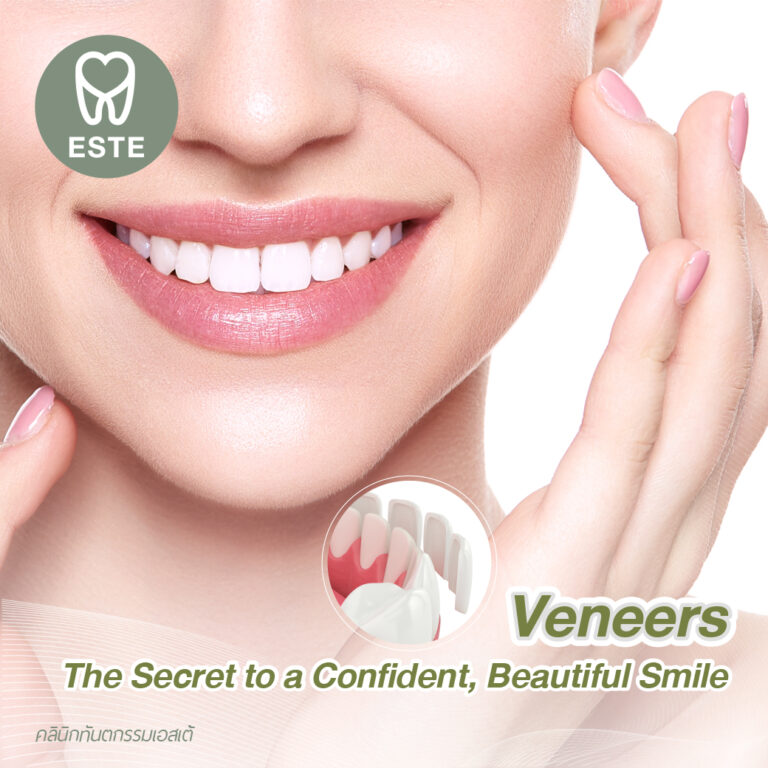
Veneers: The Secret to a Confident, Beautiful Smile
A beautiful smile is captivating and enhances your personality and confidence. In today’s image-conscious world, cosmetic dentistry is gaining popularity as it helps improve smiles and correct dental imperfections, allowing you to smile with confidence. One of the most sought-after cosmetic dentistry services is “veneers.”
What are Veneers?
Veneers are thin shells of material designed to be bonded to the front surface of teeth. It’s like a makeover for the outer layer of your teeth, correcting issues such as discoloration, chips, cracks, gaps, or irregularities. Veneers restore teeth to their natural beauty and create a harmonious, flawless smile. Each smile design is unique and tailored to the individual. Veneers are a popular choice for those seeking to address imperfections, enhance their smile, boost confidence, and improve their overall appearance.
Why Choose Veneers?
Veneers offer solutions for various dental concerns:
- Discolored teeth: Correct yellowing, stains, or uneven tooth color for a brighter, whiter smile.
- Chipped or cracked teeth: Conceal chips or cracks, restoring a smooth and beautiful appearance.
- Small or spaced teeth: Adjust the size and shape of teeth to create a more proportionate look and close gaps.
- Worn teeth: Cover worn-down surfaces caused by grinding or wear and tear.
- Misshapen teeth: Reshape teeth that are pointed, short, or twisted.
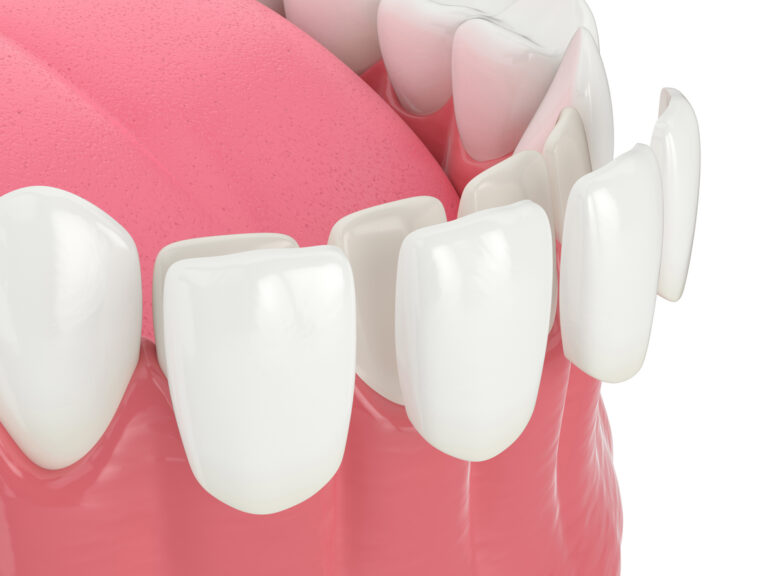
Types of Veneers
Veneers come in different types, each with its characteristics, advantages, and suitability. Let’s explore the differences between each type:
- Composite Veneers
Composite veneers are made from the same resin material used for fillings. They offer a natural look and can be completed in a single visit. The dentist directly sculpts the composite material onto the tooth surface, customizing the shape, color, and size to match your teeth.
Advantages:
- Affordable and accessible
- Completed in one visit
- Easy to repair or replace if chipped or damaged
- Minimal or no tooth preparation required
Disadvantages:
- Less durable than ceramic veneers, may stain or wear down over time
- Shorter lifespan, typically around 2-5 years, depending on care
- May not be suitable for severe dental problems, such as heavily discolored or extensively damaged teeth
- Ceramic Veneers
Ceramic veneers are made from high-quality ceramic, offering strength, durability, and a natural appearance. The dentist prepares the tooth surface by removing a small amount of enamel, takes an impression, and sends it to a dental laboratory for fabrication. This process takes about 1-2 weeks. Once the veneers are ready, the dentist bonds them to your teeth.
Advantages:
- Highly aesthetic, closely resembling natural teeth
- Wide range of shades and a natural shine
- Resistant to staining and wear, maintaining their beauty for a long time
- Long lifespan, typically around 10-15 years
- Suitable for various dental concerns, such as discoloration, chips, cracks, or gaps
Disadvantages:
- More expensive than composite veneers
- Requires some tooth preparation
- Takes longer to complete than composite veneers
- Injectable Veneers
Injectable veneers are a newer technique that is gaining popularity. Unlike traditional veneers that use pre-fabricated ceramic or resin shells, injectable veneers use a flowable composite material injected into a silicone mold that covers the tooth. The dentist then shapes and polishes the material to create a natural-looking veneer.
Advantages:
- Quick and convenient: Requires less time than traditional veneers and can be completed in a single visit.
- Affordable: Less expensive than ceramic veneers.
- Minimal tooth preparation: Preserves more of the natural tooth structure.
- Natural-looking: The material is thin and blends seamlessly with the tooth.
- Easy to repair: Can be easily repaired or replaced if chipped or damaged.
Disadvantages:
- Durability: May be less durable than ceramic veneers and prone to staining or wear over time, especially with improper care.
- Lifespan: May have a shorter lifespan than ceramic veneers, typically around 2-5 years, depending on care.

Which Type of Veneer is Right for You?
Choosing the right veneer depends on several factors:
- Dental concerns: Ceramic veneers are more resistant to staining than composite veneers and are suitable for addressing discoloration, chips, cracks, gaps, and wear.
- Budget: Composite veneers are more affordable, while ceramic veneers offer greater durability and longevity at a higher cost.
- Aesthetic preferences: Ceramic veneers offer a more natural and polished look compared to composite veneers.
- Lifestyle: Composite veneers are suitable for minor corrections and quicker treatment, while ceramic veneers are ideal for those seeking durability and are willing to commit to proper maintenance.
- Overall oral health: Individuals with gum disease or bite issues should consult with their dentist before getting veneers.
Veneer Procedure at ESTE Dental Clinic
- Consultation and treatment planning: The dentist examines your oral health, takes X-rays, and makes impressions to assess your needs and plan the appropriate treatment.
- Tooth preparation: In some cases, minimal tooth preparation may be necessary for optimal veneer placement.
- Impressions and model fabrication: The dentist takes impressions and creates a model of your teeth to send to the lab for veneer fabrication.
- Temporary veneers: While waiting for the permanent veneers, temporary veneers may be placed.
- Permanent veneer placement: Once the permanent veneers are ready, the dentist cleans the teeth and bonds the veneers using a special adhesive.
- Final adjustments: The dentist checks the fit and aesthetics of the veneers and makes any necessary adjustments.
How to Care for Your Veneers
- Maintain good oral hygiene: Brush and floss regularly, just like you would with natural teeth.
- Avoid hard and sticky foods: This helps prevent chipping or damage to the veneers.
- Don’t bite or chew on hard objects: Such as ice or bottle caps.
- Visit your dentist for regular check-ups: At least twice a year.
Veneer Costs
Veneers are a cosmetic dental treatment that can improve the shape and appearance of your teeth, addressing issues like discoloration, chips, cracks, and gaps to enhance your smile and confidence. The cost of veneers can vary depending on several factors, including:
- Type of veneer: Composite veneers are less expensive than ceramic veneers due to differences in materials and fabrication processes. Ceramic veneers are more costly but offer superior aesthetics, durability, and longevity.
- Number of teeth: The more teeth being treated, the higher the overall cost.
- Complexity of the case: Complex dental problems, such as severely chipped, cracked, or misaligned teeth, may require more complex treatment techniques, potentially affecting the cost.
- Dentist’s expertise: Highly experienced and specialized dentists may have higher treatment fees.
- Technology and equipment: Clinics using advanced technology and equipment, such as 3D oral scanners, may have higher treatment costs.
- Additional services: Some clinics may offer additional services, such as teeth whitening or gum treatment, which can affect the overall cost.

Where to Get Veneers
Veneers are a popular choice for achieving a beautiful and confident smile. ESTE Dental Clinic in Bangsaen and Pattaya offers veneer services with experienced dentists, high-quality materials, and advanced technology. We are committed to providing the best possible service to help you achieve a natural-looking, confident smile.
Smile beautifully and confidently. Choose ESTE Dental Clinic with our specialized dentists.
Contact us for inquiries, appointments, and consultations on all your dental health needs.
- Line: @estedental
- Line: https://lin.ee/ILeOEvY
- ESTE Dental Clinic Bang Saen Call 062-446-1155
- ESTE Dental Clinic Pattaya Call 092-469-1155
